Meta Quest 3 vs Meta Quest 3S: Is the 4K Pancake Lens Upgrade Worth the Extra $200?
Meta Quest 3 All-in-One Mixed Reality Headset vs Meta Quest 3S 128GB Mixed Reality Headset
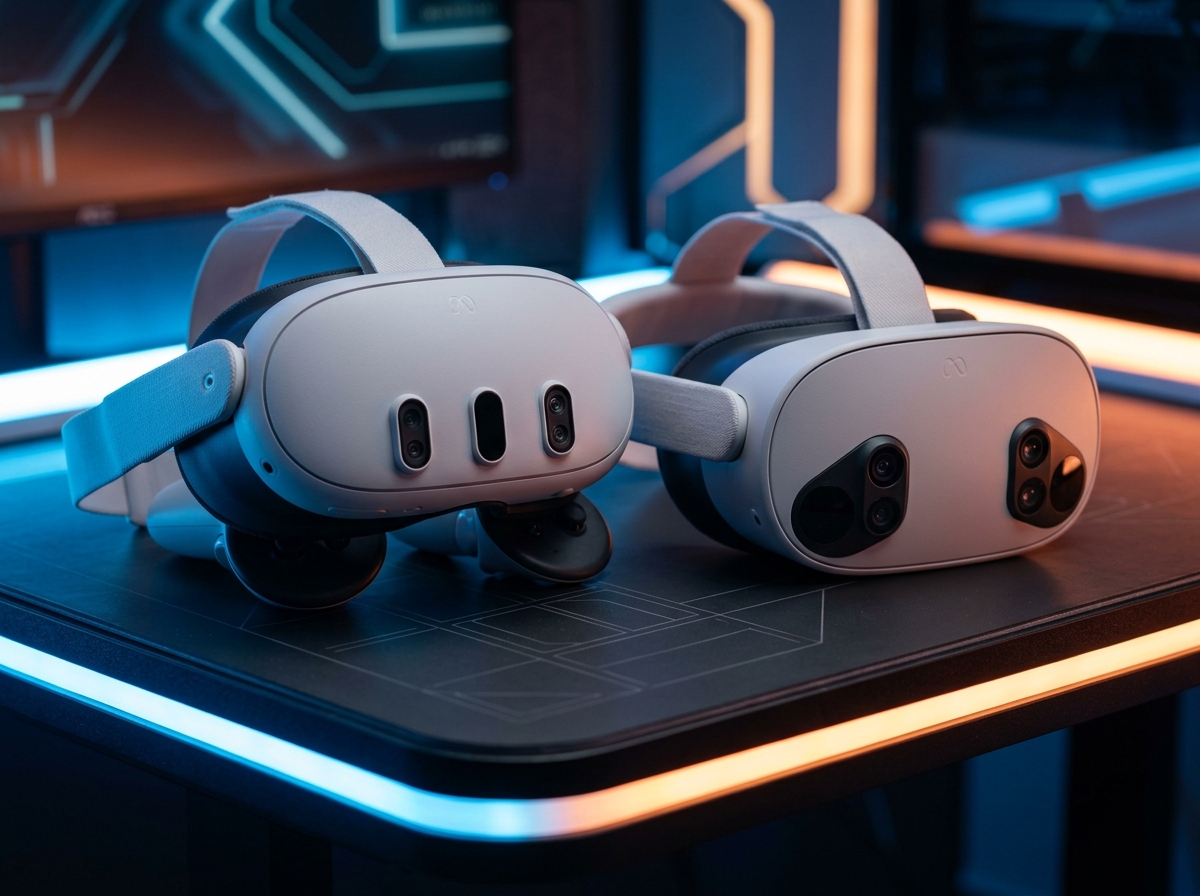
Meta Quest 3 All-in-One Mixed Reality Headset
- ✓ Ultra-sharp 4K+ Infinite Display pancake optics deliver edge-to-edge optical clarity
- ✓ Wider 110-degree field of view enhances peripheral immersion and spatial awareness
- ✓ Continuous stepless mechanical IPD adjustment wheel fits exact pupil distances
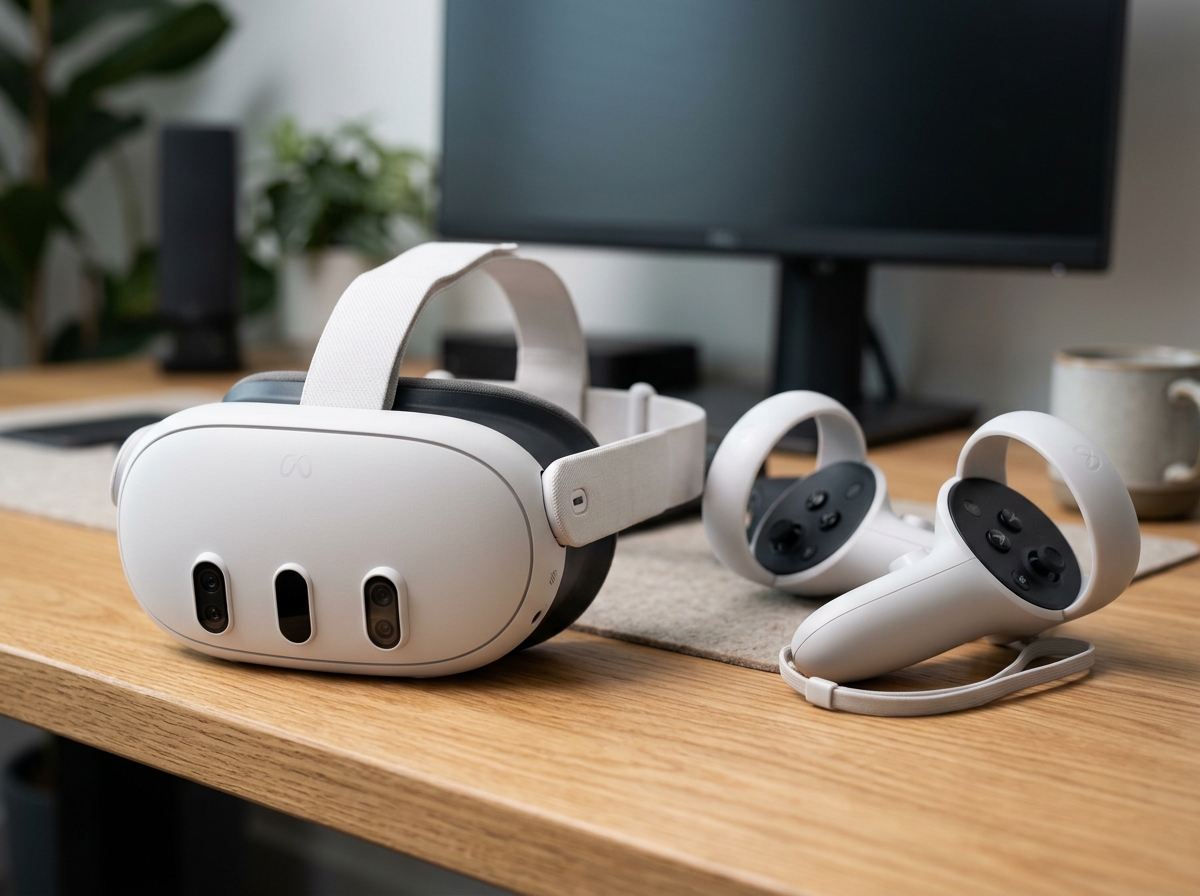
Meta Quest 3S 128GB Mixed Reality Headset
- ✓ Unbeatable $299 price tag packs the identical flagship Snapdragon XR2 Gen 2 processor
- ✓ Plays 100% of the exact same games including Batman: Arkham Shadow and Asgard's Wrath 2
- ✓ Slightly longer battery life (approx. 2.5 hours) on a single charge
While the Quest 3 remains the luxury choice for hardcore VR purists who demand edge-to-edge pancake clarity, the Quest 3S is the indisputable champion of consumer value, giving you 100% of next-gen gaming power and mixed reality features for $200 less.
Side-by-Side Technical Comparison
Direct spec-for-spec breakdown
| Feature | Meta Quest 3 All-in-One Mixed Reality Headset | Meta Quest 3S 128GB Mixed Reality Headset |
|---|---|---|
| Processor & RAM | Snapdragon XR2 Gen 2 / 8GB RAM | Snapdragon XR2 Gen 2 / 8GB RAM |
| Lens Optics | WINNER Slim Pancake Optics (Edge-to-Edge Sharpness) | Fresnel Lenses (Center Sweet Spot) |
| Display Resolution | WINNER 2064 x 2208 per eye (4K+ Infinite Display) | 1832 x 1920 per eye |
| Field of View (Horizontal) | WINNER 110° FOV | 96° FOV |
| Battery Runtime | Approx. 2.2 hours | WINNER Approx. 2.5 hours |
| Mixed Reality Passthrough | Dual 4MP RGB + Depth Sensor | Dual 4MP RGB + IR Floodlights |
| Starting Price | $499.99 | WINNER $299.99 |
Meta shook up the VR landscape by releasing two headsets sharing the same generational generation name: the flagship Meta Quest 3 ($499) and the aggressive budget challenger Meta Quest 3S ($299).
Because both headsets share the exact same internal processor, play the same exclusive library of titles, and feature full-color mixed reality, prospective buyers face a critical dilemma: Is the $200 price jump for the Quest 3 actually worth it, or should you grab the Quest 3S and pocket the difference?
Here is our head-to-head breakdown.
1. Optics & Visual Clarity: Pancake vs Fresnel Lenses
This is where the $200 price delta is physically spent:
- Meta Quest 3 (Pancake Optics): The Quest 3 uses ultra-thin folded pancake lenses paired with dual high-resolution displays (2064 x 2208 per eye). The visual result is breathtaking: text is sharp across the entire field of view, chromatic aberration is virtually nonexistent, and you can glance around using your eyes rather than having to turn your whole head.
- Meta Quest 3S (Fresnel Optics): The Quest 3S adopts the optical stack of the Quest 2 (1832 x 1920 per eye). While games still look sharp and colorful in the dead center, the optical “sweet spot” is much tighter. Looking toward the perimeter of your vision introduces slight concentric ring blur and god rays in dark scenes with high-contrast text.
Winner: Meta Quest 3
2. Field of View & Physical Adjustability
- Field of View: The Quest 3 provides an expansive 110-degree horizontal field of view, noticeably opening up your peripheral vision in racing and flight simulators. The Quest 3S delivers 96 degrees, which feels slightly more like looking through ski goggles.
- IPD Adjustment: The Quest 3 features a smooth stepless mechanical scroll wheel underneath the visor (58mm to 70mm), ensuring perfect alignment with your pupils. The Quest 3S features a 3-position click slider (58mm, 63mm, 68mm) inside the facial interface.
Winner: Meta Quest 3
3. Gaming Performance: 100% Identical
If you were worried that the Quest 3S would be treated as a second-class gaming device, don’t be:
- Identical Snapdragon XR2 Gen 2 Engine: Both devices feature the exact same cutting-edge Qualcomm processor and 8GB of RAM.
- Full Next-Gen Game Library: Graphically demanding blockbusters like Batman: Arkham Shadow, Asgard’s Wrath 2, Red Matter 2, and Beat Saber render identically on both headsets. There are zero game titles locked exclusively to the Quest 3.
Winner: Tie
4. Battery Life & Mixed Reality
- Battery Runtime: Surprisingly, the Quest 3S has a slight edge here. Driving a single LCD display requires less energy than driving dual independent panels, giving the Quest 3S roughly 2.5 hours of continuous gameplay, compared to around 2.2 hours on the Quest 3.
- Mixed Reality Passthrough: Both headsets feature dual 4MP RGB color cameras that transform your physical room into an interactive digital playground. While the Quest 3 includes a dedicated hardware depth projector, real-world spatial room mapping on the Quest 3S using IR sensors is virtually indistinguishable for everyday living room games.
Winner: Meta Quest 3S
Final Verdict: Which One Should You Buy?
🏆 Buy the Meta Quest 3S ($299) if:
- You are buying your first VR headset or upgrading from an original Quest 1 or Quest 2.
- You primarily want to play active workout games (Beat Saber, Supernatural, Pistol Whip) where you focus straight ahead and don’t obsess over tiny text details.
- You want the absolute maximum gaming value per dollar without spending half a thousand dollars.
🥈 Buy the Meta Quest 3 ($499) if:
- You plan to use the headset as a virtual multi-monitor workspace for browsing, reading PDFs, or remote desktop work.
- You are a VR enthusiast who wants razor-sharp edge-to-edge optical clarity and the widest possible 110-degree FOV.
- You have an unconventional eye spacing (IPD) that requires precise millimeter calibration.
SpecOfTheDevil is a participant in the Amazon Services LLC Associates Program. Clicking links may earn an affiliate commission at no extra cost to you.